10 Children Hospitalised After Chlorine Leak at Yerawada Swimming Pool
Yerawada Pool Chlorine Leak:-Ten children were hospitalised after a suspected chlorine-related incident at the swimming pool of the Government Regional Sports Complex in Yerawada, Pune, on the night of Wednesday, September 30, 2026.
The children, aged between 13 and 15 years, suddenly developed symptoms of nausea and vomiting around 9 pm. They were immediately taken to a hospital and kept under medical observation.
Yerawada Pool Chlorine Leak: What Happened
According to initial reports, the children were at the pool when they began showing symptoms of chlorine exposure. Some reports — including a Marathi news video — suggested the possibility of excessive chlorine use, with children entering the pool soon after chlorine was added to the water.
Official accounts, however, describe the incident as a “suspected chlorine gas leak.”
The exact cause — whether a leak, over-chlorination, or improper handling — is still being determined by police.
Yerawada Pool Chlorine Leak: Police Statement
An official from the Yerawada police station stated:
“They were kept under observation, and their condition is now normal. We have begun an inquiry to ascertain what caused the leak and whether any negligence was involved.”
Police confirmed they are examining:
- The circumstances of the incident
- Handling and storage of chlorine at the swimming pool
- Whether prescribed safety measures were followed
- Any possible negligence on the part of staff or management
Officers are also recording statements from people who were present at the pool at the time and reviewing other relevant operational details.
Current Status of the Children
All 10 children have recovered, and their condition is reported as normal by the morning of October 1, 2026. No fatalities have been reported.
About the Facility
The Government Regional Sports Complex in Yerawada is a public facility used for various sporting and training activities, including swimming. It caters to young athletes and children from across the city and falls under stricter civic oversight for chemical handling and safety compliance.
Yerawada Pool Chlorine Leak: What Are the Safety Rules?
India does not have a single nationwide mandatory law exclusively for all swimming pools, but public and commercial pools are governed by a combination of Bureau of Indian Standards (BIS) codes, local municipal rules, and state-level regulations.
Key Indian Standards
| Standard | Purpose |
|---|---|
| IS 16508 : 2017 | Swimming Pool for Public – Code of Safety. Covers design, water treatment, disinfection, and operational safety |
| IS 3328 : 1993 | Quality Tolerances for Water for Swimming Pools – sets chemical, physical, and bacteriological standards |
Chlorine and Water Quality Requirements (Most Relevant to the Yerawada Incident)
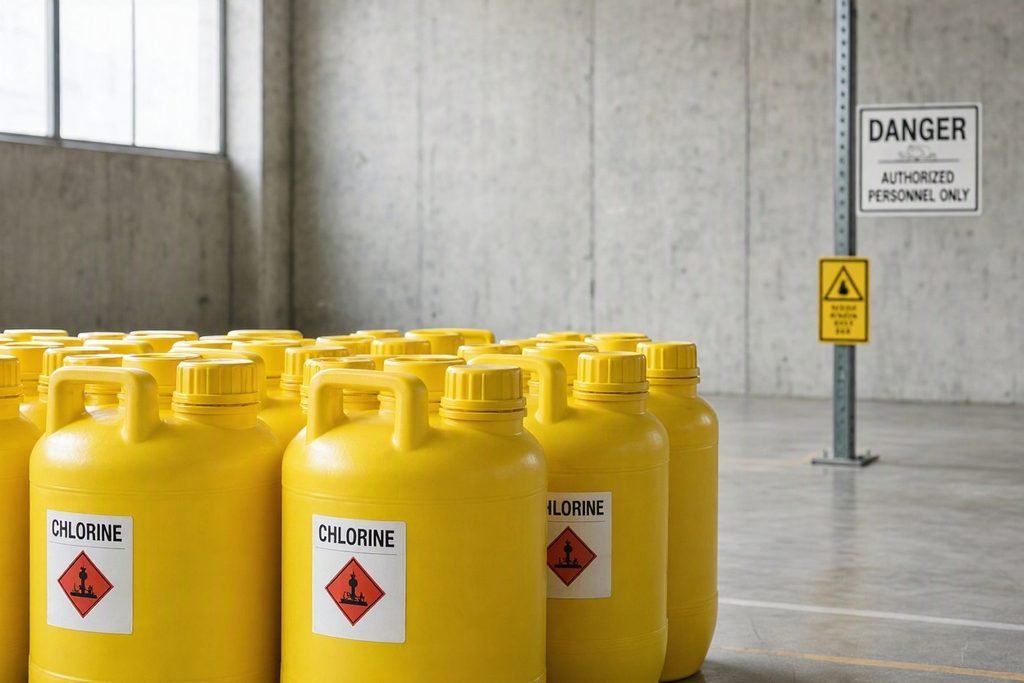
Image: AI-generated for PuneTV
According to IS 16508 : 2017:
- Free chlorine residual must be maintained between 1.0 and 4.0 ppm
- When pool water temperature exceeds 30°C, free chlorine must be at least 2.0 ppm
- Continuous disinfection is mandatory using chlorine (gaseous or compounds), bromine, or other approved agents
- Water must also meet the tolerances in IS 3328, with pH generally recommended in the 7.2–7.8 range
Practical guidelines commonly followed:
- Ideal free residual chlorine: around 1–3 ppm (many operators aim for ~2 ppm)
- Regular water testing — at least twice daily in public pools
- Proper handling and storage of chlorine to prevent gas leaks or over-dosing
Other Important Safety Requirements for Public Pools
| Requirement | Details |
|---|---|
| Lifeguards | Certified lifeguards must be present (minimum 2 for smaller pools) |
| Life-saving equipment | Lifebuoys, life jackets, rescue poles, first-aid kits, oxygen cylinder/respirator |
| Signage | Clear depth markers, “No Diving” zones, emergency contacts, safety rules |
| Fencing/Barriers | Pools should be enclosed (typically at least 4 ft / 1.2 m high) |
| Supervision | Pool manager responsible for overall safety; no unaccompanied young children |
| Hygiene | Pre-swim showers mandatory; proper filtration with turnover rates (usually ≤6 hours) |
| Emergency protocols | Staff trained in CPR and first aid; documented emergency action plans |
Local Enforcement
- Municipal corporations (PMC, PCMC) issue licenses and conduct inspections
- Rules vary by city/state — e.g., Greater Mumbai Swimming Pools Rules, Tamil Nadu Urban Local Bodies Rules 2015, Delhi Police licensing norms
- Government-run facilities like the Yerawada Regional Sports Complex fall under stricter civic oversight for chemical handling and safety compliance
Note on Chlorine Gas
After incidents like the 2023 Kasarwadi pool leak in Pimpri-Chinchwad, some civic bodies (e.g., PCMC) banned the use of chlorine gas cylinders in municipal pools and switched to safer chlorine powder/granules.
Background
Similar chlorine-related incidents have occurred at swimming pools in the Pune region in the past. In 2023, a similar incident was reported at Kasarwadi, usually linked to issues with storage cylinders, maintenance, or improper handling of chlorine used for water disinfection.
Yerawada Pool Chlorine Leak: Key Takeaways
| Aspect | Details |
|---|---|
| Location | Government Regional Sports Complex, Yerawada, Pune |
| Date & Time | September 30, 2026, around 9 pm |
| Victims | 10 children, aged 13–15 years |
| Symptoms | Nausea and vomiting |
| Status | All recovered; condition normal |
| Cause | Suspected chlorine gas leak / possible over-chlorination |
| Investigation | Yerawada police inquiry ongoing |
| Safety Standard | IS 16508 : 2017 — Chlorine residual 1–4 ppm |
| Local Authority | PMC (Pune Municipal Corporation) |
| Past Incidents | Kasarwadi pool leak (2023) |
The inquiry by Yerawada police is ongoing, and further official updates are expected as the investigation progresses. Violations of safety standards can lead to inquiries, license suspension, or legal action, as seen in past incidents.
This article is based on reports from Marathi news outlets, the official statement from Yerawada police, and Bureau of Indian Standards (IS 16508 : 2017, IS 3328 : 1993) as of October 1, 2026. Specific details are subject to change as the investigation proceeds.
Also read:-pune-ring-road-land-acquisition-2026
