The Silent Smog: Why Pune’s AQI is Climbing Before Winter
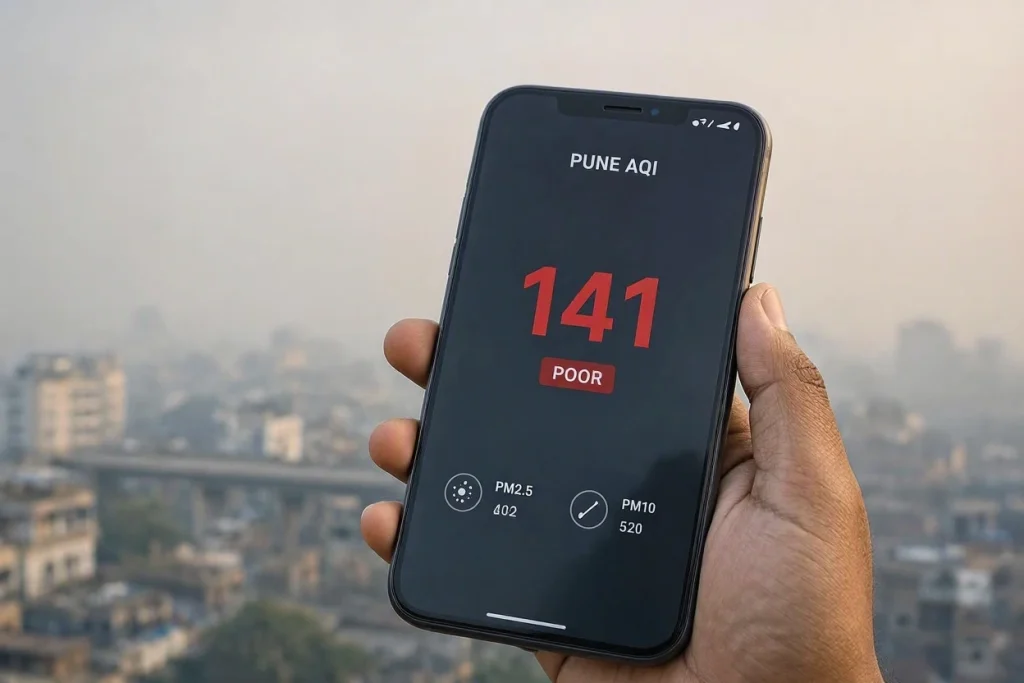
(Image: AI-generated for PuneTV)
The Pune AQI quietly slipped into the “moderate” to “poor” range for much of October 2026. Data from the Central government’s Sameer app shows the city’s Air Quality Index remained above 100 on nearly every day of the month, dipping below that mark only on 4, 5, and 6 October.
In neighbouring Pimpri-Chinchwad, the picture was often worse, with Bhosari recording readings as high as 158.
This was not the dramatic winter smog that grips northern cities, nor a sudden crisis that dominated headlines. It was a steady, almost unnoticed climb—the kind of pollution that settles into daily life before people fully register its cost.
Why the Pune AQI Numbers Climbed
The primary trigger was the withdrawal of the monsoon and the onset of prolonged dry weather. Rain normally washes particulate matter out of the air and keeps dust on the ground. Without it, road dust, construction debris, and soil from open sites become airborne and linger. Weak winds further reduced the atmosphere’s ability to disperse pollutants.
Vehicular emissions remain a constant source across the expanding metropolitan region. Construction activity—visible across large parts of the city and its outskirts—adds significant volumes of dust. Open waste burning continues in pockets despite rules against it. Industrial emissions, particularly in Pimpri-Chinchwad, contribute additional load.
Local monitoring stations reflected this unevenness: Revenue Colony in Shivajinagar recorded some of the highest late-October readings (around 149), while Katraj stayed relatively better at times (near 91). These factors combined to keep PM2.5 and PM10 levels elevated. The result is prolonged exposure that is especially hard on children, the elderly, and people with asthma, heart conditions, or other respiratory issues.
How Winter Weather Will Worsen the Pune AQI
As temperatures drop and nights grow cooler, meteorological conditions typically worsen the problem. Temperature inversions—where cooler air near the ground is trapped under warmer air above—limit vertical mixing. Pollutants accumulate closer to where people breathe. Lower wind speeds compound the effect.
Experience from previous winters in Pune shows that these conditions can push air quality from moderate into the poor category more frequently, especially if emissions continue at current levels. The window before the coldest months is therefore critical. What happens in the remaining weeks of autumn will shape how severe the winter air becomes.
What Citizens Can Do to Improve the Pune AQI Now
Individual and collective action can still make a measurable difference before the worst of the season arrives.
Cut Personal Emissions
Prefer walking, cycling, or public transport for shorter trips. Car-pool when possible. Keep vehicles well-maintained; poorly tuned engines and older diesel vehicles emit far more. Avoid unnecessary idling.
Reduce Dust and Burning at the Source
If you live near or manage a construction site, insist on proper covering of materials, regular water sprinkling, and wheel-washing for trucks. At home and in societies, stop open burning of dry leaves, garden waste, or household refuse—compost or arrange proper collection instead. Report illegal burning when you see it.
Protect Yourself and Your Household
Check daily AQI through reliable apps before planning outdoor exercise, especially early mornings when pollution often peaks. Sensitive individuals should limit prolonged outdoor activity on higher-AQI days and consider well-fitted N95 or equivalent masks when levels rise. Indoor air purifiers with HEPA filters help in sealed rooms; keep windows closed during peak pollution hours and ventilate when outdoor air is cleaner.
Support Greener Spaces and Cleaner Systems
Plant native trees and maintain green cover in housing societies and neighbourhoods—vegetation helps trap some particulate matter. Advocate for better enforcement of construction dust norms, stricter monitoring of industrial emissions, and improved public transport and last-mile connectivity. Support local campaigns that push for covered construction sites, regular road sweeping, and an end to open waste burning.
Monitor and Share Information
Follow station-level data rather than city averages alone; pollution varies sharply across Pune. Share accurate readings with neighbours and housing societies so more people can adjust their routines.
Pune’s October air quality story is a quiet warning rather than a sudden emergency. The city still has time to blunt the winter peak through reduced emissions, better dust control, and informed daily choices. The air we breathe in December and January will partly depend on the decisions made in the weeks ahead. Cleaner air is not only a municipal responsibility—it is a collective one that begins with everyday actions taken now.
The Health Impact of the Rising Pune AQI
The steady climb of the Pune AQI is not just a statistic; it is a direct threat to public health. The prolonged exposure to elevated PM2.5 and PM10 levels is especially hard on vulnerable groups.
Children, whose lungs are still developing, and the elderly are at the highest risk. People with pre-existing conditions like asthma, heart disease, or other respiratory issues are also highly susceptible. Unlike the dramatic, visible smog of northern cities, this is a silent threat. The pollution settles into daily life, causing long-term damage that is often unnoticed until it becomes a serious health crisis.
The Silent Warning: Pune AQI and the Road Ahead
The Pune AQI story this October is a quiet warning rather than a sudden emergency. The city still has time to blunt the winter peak through reduced emissions, better dust control, and informed daily choices.
The air we breathe in December and January will partly depend on the decisions made in the weeks ahead. Cleaner air is not only a municipal responsibility—it is a collective one that begins with everyday actions taken now. By acting today, Pune can protect its residents and ensure a healthier, breathable future.
Also read : purandar-international-airport-tender-pune
