Maharashtra’s Sugar Crisis: The Economics and Politics Behind Pune’s Farmer Protest
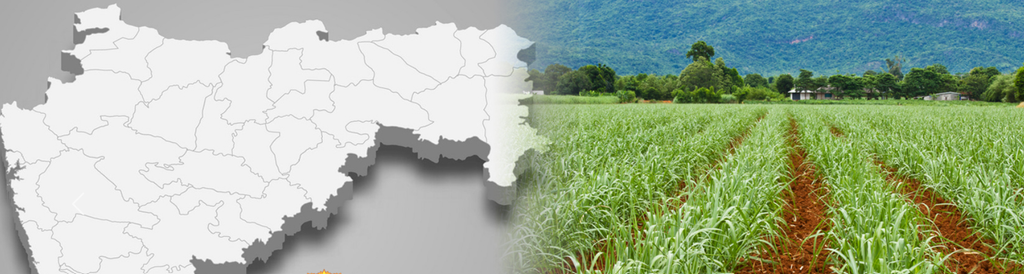
Credit: mahasugar.in / Maharashtra State Co-operative Sugar Factories Federation
Maharashtra Sugar Crisis :The sugarcane farmers’ protest at Pune’s Sugar Complex on October 8 is not just another demonstration. It sits at the intersection of Maharashtra’s most organised rural interest group and the state’s most politically sensitive industry.
Maharashtra Sugar Crisis : The Economic Stakes
Maharashtra is India’s largest sugar producer. In the 2025-26 season, the state crushed approximately 104-105 million tonnes of cane and produced around 99 lakh tonnes of sugar.
The demands raised at the protest carry significant economic weight:
For Farmers:
- A jump from the current FRP of ₹3,650 per tonne to ₹5,000 per tonne represents a 37% increase
- On Maharashtra’s total cane production, this could transfer an additional ₹13,000-15,000 crore annually to farmers
- Delayed crushing improves recovery, which directly improves farmer returns
For Sugar Mills:
- Higher cane costs add thousands of crores in procurement expenses
- Many cooperative mills already operate on thin or negative margins
- Without matching sugar price relief, higher FRP could lead to more arrears and closures
For Consumers:
- Higher sugar MSP (₹55 per kg) would push retail prices upward
- Current retail sugar prices are already around ₹55-63 per kg in many markets
- Sustained price increases hurt household budgets and food processing industries
Maharashtra Sugar Crisis :The Political Dimension
Sugarcane and cooperative sugar mills have long been central to Maharashtra’s power structure. The protest carries significant political weight for several reasons:
1. Pressure on the Ruling Alliance
The Mahayuti government (BJP + Shiv Sena + NCP) faces internal strain. Notably, Abhijit Pote, a youth leader from Eknath Shinde’s Shiv Sena, has publicly demanded ₹5,000 per tonne and threatened indefinite agitation. This highlights intra-alliance friction — a partner party’s leader challenging a government policy.
2. Opportunity for the Opposition
The Maha Vikas Aghadi (Congress, Shiv Sena UBT, NCP-SP) can frame the early-crushing decision as anti-farmer. Leaders like Raju Shetti (Swabhimani Shetkari Sanghatana) have been active on sugarcane issues, amplifying the narrative.
3. The Rural Vote Bank
Sugarcane farmers form a numerically and organisationally significant bloc in Western Maharashtra, parts of Marathwada, and Vidarbha. Sustained agitation could influence local body elections and future Assembly polls.
Maharashtra Sugar Crisis : The Historical Context
Maharashtra’s sugar cooperatives have traditionally been strongholds of Congress and NCP influence. Many have realigned toward the BJP and Ajit Pawar faction in recent years.
Protests involving groups linked to both ruling and opposition sides demonstrate that farmer discontent transcends party lines.
Maharashtra Sugar Crisis : The Centre-State Angle
Some demands — such as sugar MSP revision and ethanol pricing — fall under the central government’s domain. A meeting involving Union Food Minister Pralhad Joshi has been referenced in related agitations.
This gives the state government room to shift some responsibility to New Delhi, while the opposition can attack both levels.
What a Balanced Outcome Might Look Like
Economic analysts suggest a middle path:
- Moderated FRP increase — perhaps ₹1,000 per tonne rather than ₹1,350
- Meaningful sugar MSP hike — the industry has sought ₹40-45 per kg
- Stronger ethanol pricing — to improve mill viability
- Transparent weighing systems — to build farmer trust
Without such a package, the risk is renewed payment arrears, reduced cane acreage over time, or heavier fiscal support.
Maharashtra Sugar Crisis :The Bottom Line
The protest is politically consequential because it strikes at the intersection of Maharashtra’s most organised rural interest group and the ruling alliance’s need to manage competing constituencies.
The outcome will shape perceptions of the government’s rural credentials in the sugar belt more than any single economic measure.
(Source: Economic and political analysis based on government data and farmer organisations’ statements)
Also read :-sugarcane-farmers-protest-pune-sugar-complex

Pingback: Sugarcane Crushing Season Delay: Why Farmers Want Nov 15